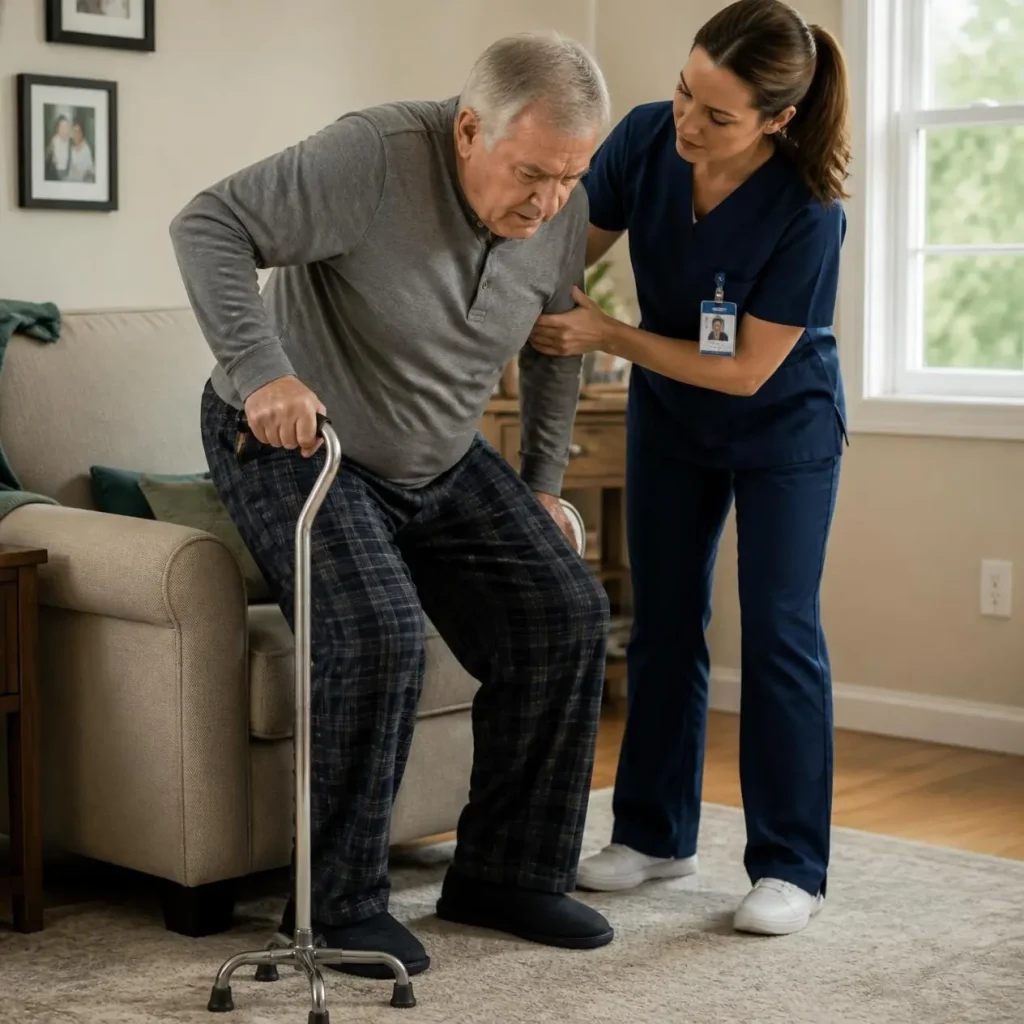
Physiotherapy at home after stroke brings benefits to restoring function. How much will she recover? And how many sessions do we need? In the days that follow, the questions families bring to us are always the same.
The science gives a clear, urgent answer: the brain heals on a timetable. There is a window when recovery comes fastest — and families who start physiotherapy inside it see the strongest results. This guide explains that window, and why the home is the best place to use it.
The Critical Window: What Happens in the Brain After a Stroke
In the weeks after a stroke, the brain enters an unusual state of heightened neuroplasticity. It actively rewires — building new pathways around the damaged tissue to take over lost functions.
But this state is temporary. The research of Professor Gert Kwakkel and others shows that most motor recovery happens within the first three months. Many clinicians call the first 90 days the golden period. Beyond six months the brain can still improve, but the same gains demand far more time and effort.
Why Early Physiotherapy at Home After Stroke Produces Bigger Gains
Three processes drive early recovery. Swelling in the brain settles and stunned cells come back online — what doctors call spontaneous recovery. At the same time, the brain releases growth chemicals that make new connections form more easily. This chemical boost peaks early, then fades.
The third driver is repetition. Rehabilitation research is blunt on this point: relearning movement takes hundreds of task repetitions. Frequent, consistent sessions matter far more than occasional intensive ones.
What Shapes Each Patient’s Recovery
No two strokes follow the same path. The main factors are:
- Severity and location — larger strokes, and strokes in movement areas, recover more slowly
- Age and fitness — younger patients often progress faster, but elderly patients absolutely still improve with the right therapy
- How soon therapy starts — days and weeks, not months
- Therapy dose — more sessions and more repetitions mean more recovery
- Mood — post-stroke depression affects up to one in three survivors and slows progress
- Family involvement — patients whose families join the process practise more and recover better
Why the Home Is the Right Setting for the Window
Hospital rehabilitation ends at discharge — often just as the golden period is at its peak. This is exactly where physiotherapy at home takes over.
Attendance is the first advantage. Transporting a weakened elderly patient to a clinic is exhausting, and skipped sessions are wasted window. At home, sessions simply happen — and consistency is what drives recovery.
The second advantage is that practice happens in the real environment. Your father relearns standing from his own armchair and walking to his own bathroom. Task-specific training research shows these skills transfer to daily life far better than clinic exercises ever do.
Finally, safety. Falls are a leading cause of injury in older adults, as the WHO falls fact sheet sets out — and stroke survivors are at especially high risk. A physiotherapist working in the home assesses the actual hazards and trains safe movement around them.
What Recovery Typically Looks Like, Month by Month
Weeks 1–4 usually bring the fastest visible change: sitting balance, early standing, the first arm movement. Months 1–3 are when walking and daily function build — this is when therapy should be at its most intensive. Months 3–6 bring slower, steadier gains in fine hand control and stamina. And after six months, progress remains possible with consistent, targeted work.
Every Enayati physiotherapist delivering post-stroke care holds an active DHA licence, and behind each one stands a full home care team — medical director, nurses, and speech therapist. You can meet our physiotherapy team here.
The Window Is Open Now
If your loved one has recently had a stroke, the most valuable weeks are the ones happening right now. Enayati brings DHA-licensed, CARF-accredited physiotherapy at home across Dubai and Sharjah — assessment within 24 hours, and a recovery plan built around the science of the critical window.
WhatsApp us on 052-765-8540 and start this week.